CHURCH HISTORY
The African Popes of the Early Church
They held the highest seat in Christendom. They shaped doctrine that still governs two billion believers. And almost no one remembers where they came from.
14 min read
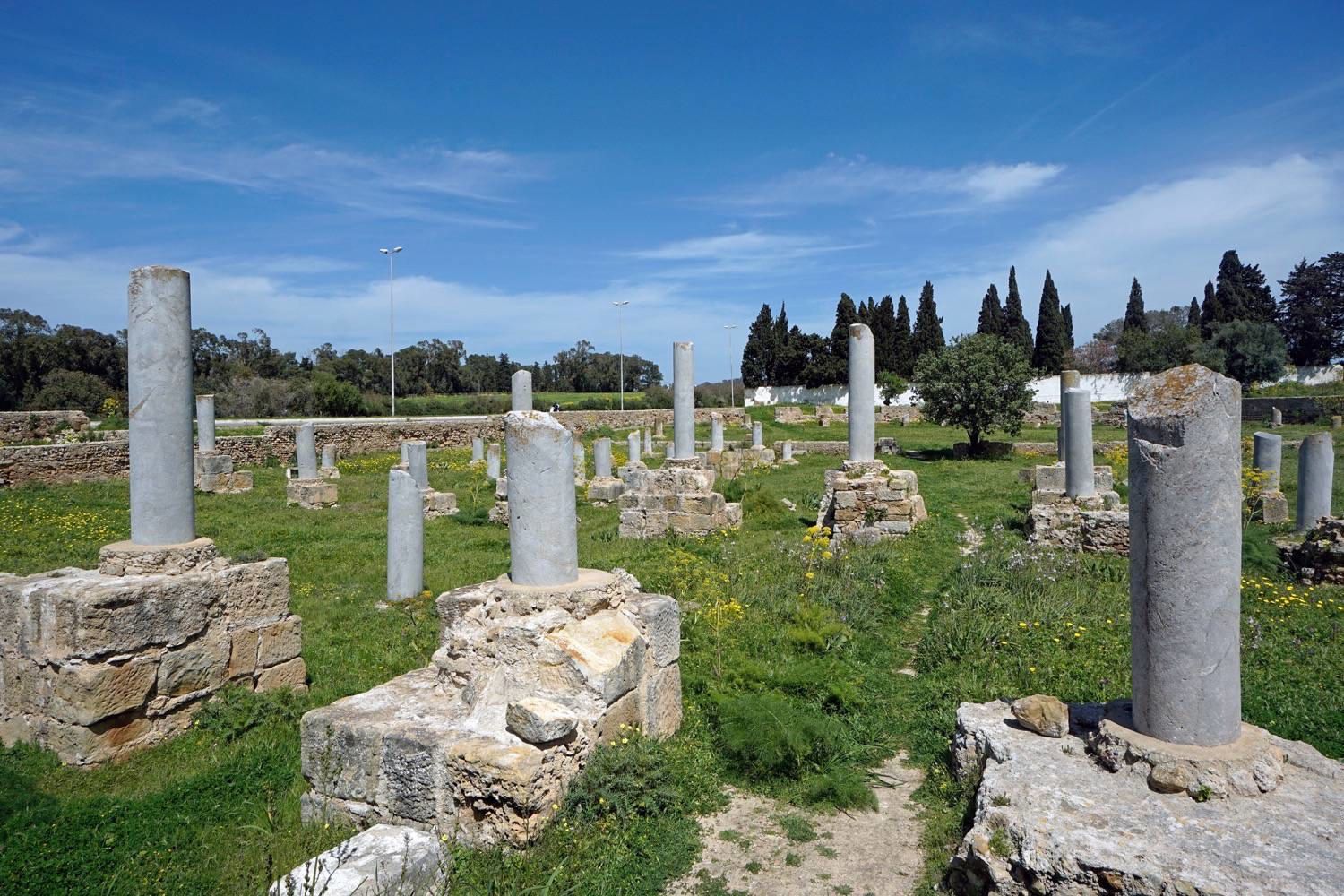
They held the highest seat in Christendom. They shaped theology. They built institutions that outlasted empires. And almost no one remembers them.
Between the second and eighth centuries, at least three men of African origin ascended to the papal throne, and several others of North African descent shaped the doctrine of the early church from Carthage, Hippo, and Alexandria. Their names sit in the official registers of the Roman Catholic Church. Yet their African identity was quietly softened, footnoted, or erased entirely from popular history.
To understand how this happened, it helps to remember what the Mediterranean world looked like in the first centuries of Christianity. Africa was not a distant edge of the empire. It was the empire's intellectual heart.
Africa at the Heart of the Empire
By the year 200 AD, Roman North Africa stretched from Egypt in the east to modern Morocco in the west. Its cities — Alexandria, Cyrene, Leptis Magna, Carthage, Hippo Regius — were among the wealthiest and most literate in the Roman world. Grain from the Maghreb fed Rome. Olive oil from Africa lit its lamps. And by the second century, African bishops were producing theology that Rome could not ignore.
Tertullian of Carthage (c. 155–220 AD) wrote the earliest surviving body of Latin Christian literature. Cyprian, bishop of Carthage in the 250s, laid down the organizational principles that would define church governance for centuries. Augustine of Hippo, born in what is now Algeria in 354 AD, produced work that remains foundational to Western theology and philosophy. This was not a periphery receiving Christianity. This was the region defining what Christianity would become.
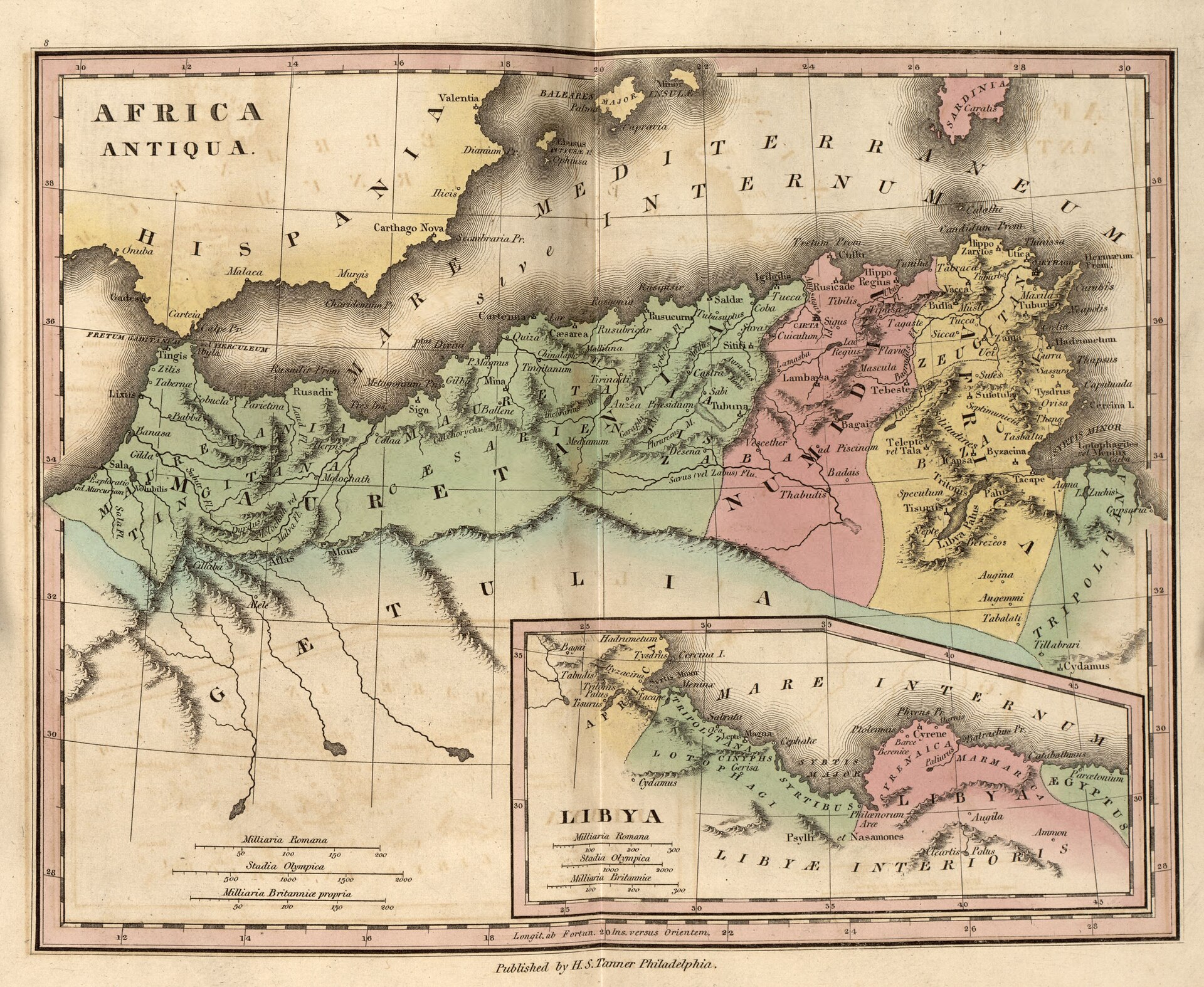
Pope Victor I: The Pope from Roman Africa
Pope Victor I served as bishop of Rome from around 189 to 199 AD. Ancient sources describe him as African by birth, most likely from the Roman province of Africa Proconsularis, the fertile region around modern-day Tunisia and Libya. He was the first bishop of Rome known to have conducted the affairs of the church in Latin rather than Greek.
Victor is best remembered for the Quartodeciman controversy. Christian communities in Asia Minor celebrated Easter on the fourteenth day of Nisan, following the Jewish calendar. Rome and most of the Western churches celebrated it on the following Sunday. Victor pushed for a single date across the entire church. When bishops in Asia refused, he moved to excommunicate them.
He was talked back from that final step by other bishops, including Irenaeus of Lyon, but the precedent stood. For the first time in recorded history, the bishop of Rome had claimed authority to bind the whole church. The idea of papal primacy — the argument that would define Western Christianity for two thousand years — began to crystallize under an African.
Pope Miltiades and the Turning of the Empire
Pope Miltiades led the church from 311 to 314 AD, described by the Liber Pontificalis as African by origin. His pontificate covered one of the most consequential decades in Christian history. In 313 AD, Emperor Constantine and his co-emperor Licinius issued the Edict of Milan, ending the persecution of Christians across the empire. Overnight, the faith Miltiades led moved from the catacombs into the halls of the imperial court.
Constantine gave Miltiades the Lateran Palace in Rome, which would remain the papal residence for a thousand years. In 313, Miltiades convened a synod at that palace to judge the Donatist controversy, a bitter dispute over rigorism and rebaptism that had erupted in North Africa. He ruled against the Donatists and defended the unity of the church — a decision that shaped Christian doctrine on repentance and church membership for centuries.
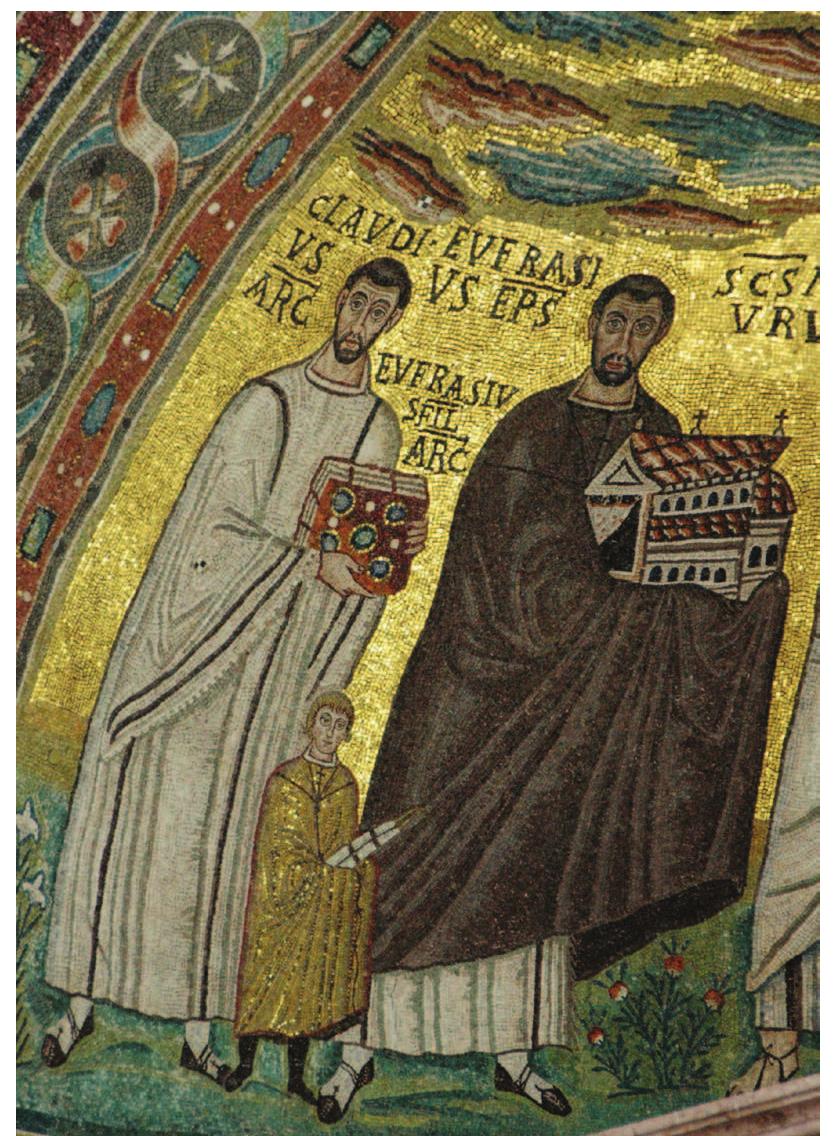
The Council of Rome, 313: How Miltiades Judged Africa
The synod Miltiades convened at the Lateran on 2 October 313 AD was more than an administrative meeting. It set the precedent for how the bishop of Rome would hear disputes from provincial churches for the next thousand years. The Donatists, led by Donatus of Casae Nigrae, had refused to accept the ordination of Caecilian as bishop of Carthage, arguing that a consecrator who had handed over scriptures during Diocletian's persecution could pass on no valid sacrament.
Miltiades expanded the panel by adding fifteen Italian bishops to the three Gallic bishops Constantine had appointed, transforming a small imperial commission into a proper Roman synod. Over three days he heard witnesses, examined documents, and ruled in Caecilian's favor. The verdict established that the personal sanctity of a minister does not determine the validity of the sacrament — a principle Augustine of Hippo would elaborate a century later against the same Donatist community.
The Donatists appealed, and Constantine convened a larger council at Arles in 314 AD that upheld the verdict. Together, the Roman and Arles decisions marked the first time an emperor treated the bishop of Rome as the first address for a doctrinal dispute anywhere in the empire. An African bishop reading a case brought by African clergy quietly rewrote the geography of church authority.
Pope Gelasius I: The Doctrine of Two Powers
Pope Gelasius I served from 492 to 496 AD. He is often described in ancient sources as African, although some later chroniclers noted he was born in Rome to an African family. Either way, his African identity was recognized in his own time.
Gelasius is remembered for one of the most influential political ideas in Western history. In a letter to the Byzantine emperor Anastasius I in 494 AD, he argued that the world was governed by two authorities — the sacred authority of priests and the royal power of kings — and that in matters of salvation, the priests held higher weight. This became known as the Two Powers doctrine, and it laid the groundwork for a thousand years of debate over the relationship between church and state.
Every subsequent argument about the limits of monarchy, the independence of religious institutions, and eventually the separation of church and state in modern liberal thought owes something to this letter. Its author was African.
The Gelasian Legacy: Sacramentary, Canon, and Reform
Gelasius did more than write one famous letter. During his four-year pontificate he convened a Roman synod in 494 AD that produced the Gelasian Decree, an early list distinguishing canonical scripture from apocryphal works — one of the first formal Roman attempts to fix the boundaries of the biblical canon in the Latin West.
His name attaches to the Gelasian Sacramentary, the oldest surviving Roman liturgical book to organize the Mass around a full cycle of prayers, prefaces, and canons. Whether Gelasius composed every prayer or later editors compiled the book under his name, its influence on the medieval Latin rite is undisputed. Every subsequent Roman missal traces part of its architecture back to that volume.
Gelasius also intervened against pagan festivals still celebrated in Rome, notably the Lupercalia, defended Roman primacy during the Acacian Schism with Constantinople, and organized famine relief across Italy after the collapse of the Western Empire in 476 AD. He governed a city in ruins, and he governed it well.
The African Theologians Behind the Popes
The three African popes did not appear in a vacuum. They came out of a Latin African church that was already the most productive theological environment in the Western Mediterranean. Tertullian coined much of the vocabulary that Latin Christianity would use for centuries — the word Trinitas to describe the Trinity, the phrase persona for the divine persons, and the framing of theology as a legal argument.
Cyprian of Carthage, martyred in 258 AD, wrote De Unitate Ecclesiae, defining the church as a single body under its bishops. Augustine of Hippo, writing between the 390s and his death in 430 AD, produced Confessions, The City of God, and a body of doctrinal work on grace, sin, and history that shaped every strand of Western Christianity that followed, from medieval Catholicism to the Protestant Reformation.
To read the councils, decrees, and creeds of the first five centuries is to read a conversation in which African voices are constant, dominant, and unmistakable.
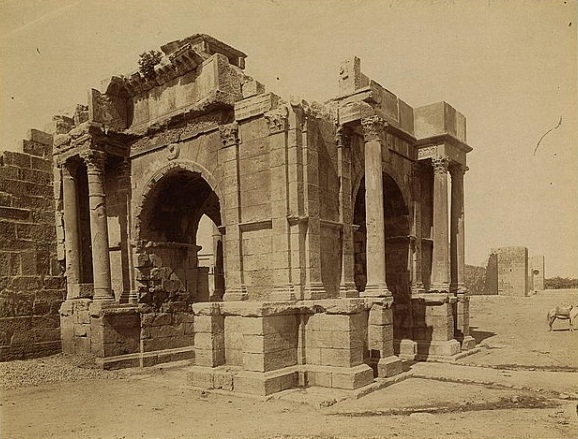
The Wider Africa: Alexandria, Perpetua, and the Martyrs
Beyond Carthage and Hippo, the wider African church shaped Christianity in ways Rome could not ignore. In 203 AD, the young noblewoman Perpetua and her enslaved companion Felicitas were executed in Carthage's amphitheater. The prison diary attributed to Perpetua is one of the earliest surviving texts written by a Christian woman in her own voice, and the account of their martyrdom circulated across the Mediterranean within a generation.
Alexandria, further east, produced Clement (c. 150–215 AD) and Origen (c. 185–253 AD), whose catechetical school pioneered the allegorical reading of scripture that would dominate Christian exegesis for a millennium. Athanasius of Alexandria (c. 296–373 AD) fought at the Council of Nicaea in 325 AD for the doctrine that Christ was of one substance with the Father, and his 367 AD Festal Letter contains the earliest surviving list of the twenty-seven books of the New Testament. Cyril of Alexandria presided over the Council of Ephesus in 431 AD that defined Mary as Theotokos, mother of God.
Optatus of Milevis, writing around 370 AD, produced the first systematic Latin ecclesiology in response to the Donatists. Fulgentius of Ruspe, exiled to Sardinia in the early sixth century, transmitted Augustinian theology into the barbarian kingdoms of the West. Take these figures out of the story and the theology of the first six centuries loses its spine.
How Their African Identity Was Erased
The erasure did not happen in a single moment. It happened gradually, through centuries of Latin manuscripts, papal biographies, and popular art. Medieval European painters portrayed early popes with European features. Renaissance catalogues of pontiffs mentioned African origins only in passing footnotes. Nineteenth-century church historians, working inside European nationalist frameworks, treated Africa as a footnote to a European story rather than a foundation of it.
By the twentieth century, most Catholics could not name a single African pope from the first millennium. The record had not been destroyed. It had simply been made invisible.
This wasn't accident. It was erasure by omission, carried out across generations.
Why This Matters
Recovering the African origins of these popes is not about assigning modern racial categories to ancient men. It is about restoring accuracy to the historical record. The early church was Mediterranean and multiethnic, and Africa was one of its central regions, not one of its outposts.
When African popes disappear from the standard story, so does the reality that Christianity in its earliest centuries was as much an African religion as a European one. That distortion has consequences. It has shaped how missionaries approached the continent in the modern era, how communities of the African diaspora have been told to relate to their own religious heritage, and how much of the world still imagines Christianity as something Europe delivered to Africa rather than something Africa helped build.
The record has always been there. Reading it honestly changes the story.
Legacy
Victor I gave the papacy its earliest claim to universal jurisdiction. Miltiades led the church into the Constantinian era and shaped its response to internal division. Gelasius I articulated a political theory that Western civilization would argue over for the next fifteen centuries. Behind them stood Tertullian, Cyprian, and Augustine — an African intellectual tradition whose fingerprints are on every page of Latin Christian doctrine.
Their story deserves to be remembered alongside the doctrines they authored.
Suggested Reading
- Peter Brown — Augustine of Hippo: A Biography
- François Decret — Early Christianity in North Africa
- Henry Chadwick — The Early Church
- J. Patout Burns and Robin Jensen — Christianity in Roman Africa
- Thomas C. Oden — How Africa Shaped the Christian Mind
- W. H. C. Frend — The Donatist Church: A Movement of Protest in Roman North Africa
Primary Historical Sources
- Liber Pontificalis — the Book of the Popes
- Eusebius of Caesarea — Ecclesiastical History
- Tertullian — Apologeticus and Against Praxeas
- Cyprian of Carthage — De Unitate Ecclesiae
- Gelasius I — Letter to Emperor Anastasius (Duo Sunt), 494 AD
- The Passion of Perpetua and Felicitas, c. 203 AD